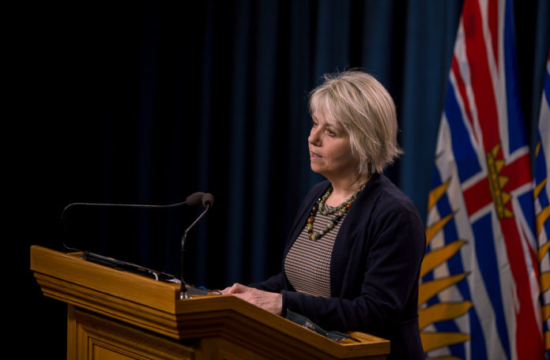
A memorial to the victims of Canada’s residential school system on the steps outside the legislature, in Victoria, on July 1, 2021. On Monday, the Penelakut Tribe posted a notice online that said it had discovered more than 160 ‘unmarked and undocumented’ graves on the nation’s grounds and foreshore.
CHAD HIPOLITO/The Canadian Press
Janice Sampson always knew graves would turn up one day on the island she and fellow residential school survivors referred to as Alcatraz.
A host of children tried to escape Kuper Island Indian Residential School, located on what is now known as Penelakut Island, by piloting makeshift watercraft over the choppy waters that separated it from southeastern Vancouver Island. The attempts were desperate bids to escape abuse and malnutrition, survivors say. Ms. Sampson said she herself tried to make the crossing when she attended the school in the 1960s.
Some died on the perilous journey, adding to the fatal notoriety of the school, which was run by the Catholic Church.
On Monday, the First Nation based on the island, the Penelakut Tribe, posted a notice online that said it had discovered more than 160 “unmarked and undocumented” graves on the nation’s grounds and foreshore. The nation did not say where or how the burials were found – whether with ground-penetrating radar or by some other means.
Penelakut Tribe representatives didn’t respond to calls from The Globe to confirm details of the notice.
St. Eugene’s, Marieval, Kamloops: What we know about residential schools’ unmarked graves so far
Will accountability ever come in the Catholic Church and the Canadian government?
Ms. Sampson said she had been anticipating the news.
“I’m not one bit surprised,” she said. “Long ago, I was told to keep my mouth shut about the things I’d seen, or I’d go missing.”
During her own escape attempt, Ms. Sampson and her best friend grabbed hold of a log and started paddling towards Chemainus, which is located about 30 kilometres south of Nanaimo.
“It didn’t look far. We thought we’d made it,” she recalled on Tuesday. “But we turned around and the Father was right there on the boat. He grabbed us by the hair and tossed us on the boat.”
They were later beat with a leather strap from head to toe, she said.
The Kuper Island Indian Residential School, which according to the National Centre for Truth and Reconciliation operated from 1890-1975, is seen on Penelakut Island, formerly known as Kuper Island on June 13, 1913.
ROYAL BC MUSEUM/Reuters
The National Centre for Truth and Reconciliation lists the names of 121 students who died at the school between its opening in 1889 and its eventual closure in 1975. Still more student deaths are believed to have gone unrecorded.
“It was a notorious school where there was known to be a lot of death,” said Terry Teegee, Regional Chief of the British Columbia Assembly of First Nations.
In remarks on Tuesday, Prime Minister Justin Trudeau said his government was committed to aiding Penelakut and other communities searching for lost graves. “To members of the Penelakut Tribe: we are here for you,” he said. “We cannot bring back those who were lost, but we can – and we will – continue to tell the truth.”
The rest of the week promises more news in a similar vein. On Thursday, the leadership of Tk’emlúps te Secwépemc First Nation, which in May announced that a preliminary search with ground-penetrating radar had discovered 215 unmarked graves near the former Kamloops Indian Residential School, will present the technical details of their work.
Kuper Island Indian Residential School’s students came from many southern Vancouver Island communities. Roxanne Harris, chief of Vancouver Island’s Stz’uminus First Nation, said her father and uncles are survivors of the school and that she grew up hearing horrific stories of life there. The food was so rotten, she said, that one of her family members used to pocket potatoes from the school’s gardens and eat them raw at night.
She said she was also told a story of a girl being pushed to her death from a school window. “People are finally ready to hear these stories,” she said. “I knew for a fact they would find things when they started searching for graves.”
The National Centre for Truth and Reconciliation has compiled historical details on horrors that children experienced at Kuper Island. An 1896 survey concluded that 107 of 264 students who had attended the school until that time had died. That same year, students set fire to the school when holidays home were cancelled. In 1959, two sisters, Patricia and Bev Joseph, died while trying to escape the school in a boat. A student committed suicide in 1966. In 2002, a former school staff member was sentenced to three years in prison for sexually abusing boys at the school.
“I want non-Indigenous Canadians to know that all this was real,” said Kuper Island survivor Steve Sxwithul’txw, a TV producer and a member of the Penelakut Tribe. “And we want someone held to account for the destruction wrought by these schools right across this country.”

Kuper Island
Industrial School
Penelakut Island
(Kuper Island)
THE GLOBE AND MAIL, SOURCE: TILEZEN;
OPENSTREETMAP CONTRIBUTORS

Kuper Island
Industrial School
Penelakut Island
(Kuper Island)
THE GLOBE AND MAIL, SOURCE: TILEZEN; OPENSTREETMAP
CONTRIBUTORS

Kuper Island
Industrial School
Penelakut Island
(Kuper Island)
THE GLOBE AND MAIL, SOURCE: TILEZEN; OPENSTREETMAP CONTRIBUTORS
Following the Kamloops announcement, Mr. Sxwithul’txw helped organize an online fundraiser to purchase radar equipment for other communities to conduct searches. When he approached Penelakut to offer some of the $150,000 in donations, he was told they had already started the work.
For much of its history, the Kuper Island school was operated by the Roman Catholic Diocese of Victoria. On Tuesday, diocese Bishop Gary Gordon said he has contacted two elders in Penelakut to ask how he can assist community healing. He has already committed to supporting mental health counselling for survivors and opening all archives under his control.
“Some bad apples got into the barrel and we didn’t do a good job of taking care of those bad apples,” he said. “We weren’t as cognizant as we should have been and weren’t listening to the victims of these terrible things. That’s the truth of it.”
As for Ms. Sampson, she would end up meeting and marrying another survivor, Donny Sampson. He, too, had tried to paddle his way from the island aboard a piece of driftwood, only to be caught once he’d reached neighbouring Thetis Island. They were both traumatized by their time at the school. Today, it provides them common cause.
“We need to find all those children,” she said. “They can’t rest until we do.”
With a report from Kristy Kirkup.
Our Morning Update and Evening Update newsletters are written by Globe editors, giving you a concise summary of the day’s most important headlines. Sign up today.